Foundation crack injection costs $750 to $1,000 per crack for polyurethane and $750 to $1,500 for structural epoxy in Toronto, according to DryShield. Resurfacing a sound slab runs $4 to $8 per square foot, about half the $12 to $18 of replacement (Nusite Group). Levelling a sunken walkway or porch slab is $1,200 to $2,500 a job, and parging runs $3 to $8 per square foot.
What does concrete repair, leveling and parging cost?
Every figure below is quoted from the page it names. These 12 rows rest on 6 independent Canadian sources, each linked on the row it carries. Where sources disagree, each row keeps one publisher's own published figure rather than a range assembled across several, so you can check any number against the sentence it came from.
Researched July 2026, every figure re-checked against its source on August 28, 2026. CAD, sources named per row. Add 13% HST unless noted.
Item
Typical range
Unit
Source
Foundation crack injection - polyurethane (leak-stopping)DryShield's own polyurethane tier, best for stopping active leaks with a flexible seal that tolerates seasonal movement. HST and finishing work such as drywall removal, insulation and repainting are not included unless quoted, and final pricing is confirmed after inspection.
Foundation crack injection - epoxy (structural bonding)DryShield's own epoxy tier, for bonding structural cracks in poured concrete where strength restoration is the goal. Same floor as polyurethane, higher ceiling. Tie-rod hole sealing is separate at $75 to $150 per hole; volume discounts apply from three cracks up.
Exterior excavation + membrane crack repairExterior repair means excavating to the footing and installing a waterproofing membrane, so it is priced per crack but scoped as a dig. RenoQuotes repeats the same $3,000 to $5,500 as its average further down the page.
Minor surface crack sealing (porch/walkway/slab)One day of work in Toronto Concrete Repairs' Average Costs table. The same page's FAQ text says minor crack sealing starts at $300 to $600, so confirm scope before treating $600 as the floor.
Parging - standard applicationGTA Brickworks says the range is wide because scope, surface condition and what is found once the old coating comes off vary a lot. It works out to $900 to $3,500 for a standard detached home's foundation.
Parging - premium two-coat installed (incl. prep + bonding agent)Alasya's rate is for a two-coat application installed, which is why it sits above GTA Brickworks' $3 to $8 standard-application figure.
Full foundation re-parge (detached Toronto home)A 2026 figure for a typical Toronto detached home. Alasya says homes with larger exposed perimeters, significant existing damage, or an acrylic finish coat land at the higher end.
Concrete resurfacing overlay - basicMaterials and labour for a polymer overlay 1/4 to 1 inch thick over a sound existing surface. Nusite is writing for property managers and puts full replacement at $12 to $18 per square foot for comparison. The $10 ceiling this guide used to show is not on their page.
Decorative stamped/broom-finish overlayA decorative finish applied while repairing, in slate, stone or brick patterns. Toronto Concrete Repairs prices it as an upgrade over a plain repair, not as a standalone floor.
Residential mudjacking/leveling job (walkway or porch slab)One day of work in Toronto Concrete Repairs' Average Costs table, for a walkway or porch slab rather than a driveway.
Spalling repair - moderate (steps/porch surface)One to two days of work. Toronto Concrete Repairs prices minor crack sealing below this at $600 to $900 and full resurfacing above it at $2,500 to $4,500.
Every band below is one publisher's own concrete repair figure, drawn to scale from the same rows as the table. Bars are grouped by the unit the publisher used, because a square-foot rate and a whole-project price do not belong on one axis.
per job
Parging patch repair (under 10 sq ft)$250–$600
GTA Masonry (May 2026)
Minor surface crack sealing (porch/walkway/slab)$600–$900
11 of these 12 rows are drawn. The other 1 is priced in a unit no other row on this page shares, or carry an open-ended figure such as a “starting at” price with no published ceiling. Neither can be placed on a shared axis honestly, so they stay in the table above with their sources rather than being drawn to a number nobody printed.
What are you actually buying?
Two quotes on the same job often differ because they are quoting different work, not different rates. This is how the trade splits it up, drawn from the rows and factors already on this page. It carries no prices on purpose: those belong beside the source that published them.
Two crack injections that are not interchangeable
Foundation cracks get injected either way, and the two resins do different jobs. A quote that does not say which one it is quoting is not yet comparable with anything.
Is the crack leaking water, or has it moved?
Polyurethane, for a leaking crack
A flexible resin that foams on contact with water and stops the leak. It seals the path water is taking. It is not adding strength back to the wall.
Epoxy, for a structural crack
A rigid resin that bonds the two faces back together, so the wall carries load across the crack again. It needs a dry crack to bond to.
What does this work look like across the Greater Toronto Area?
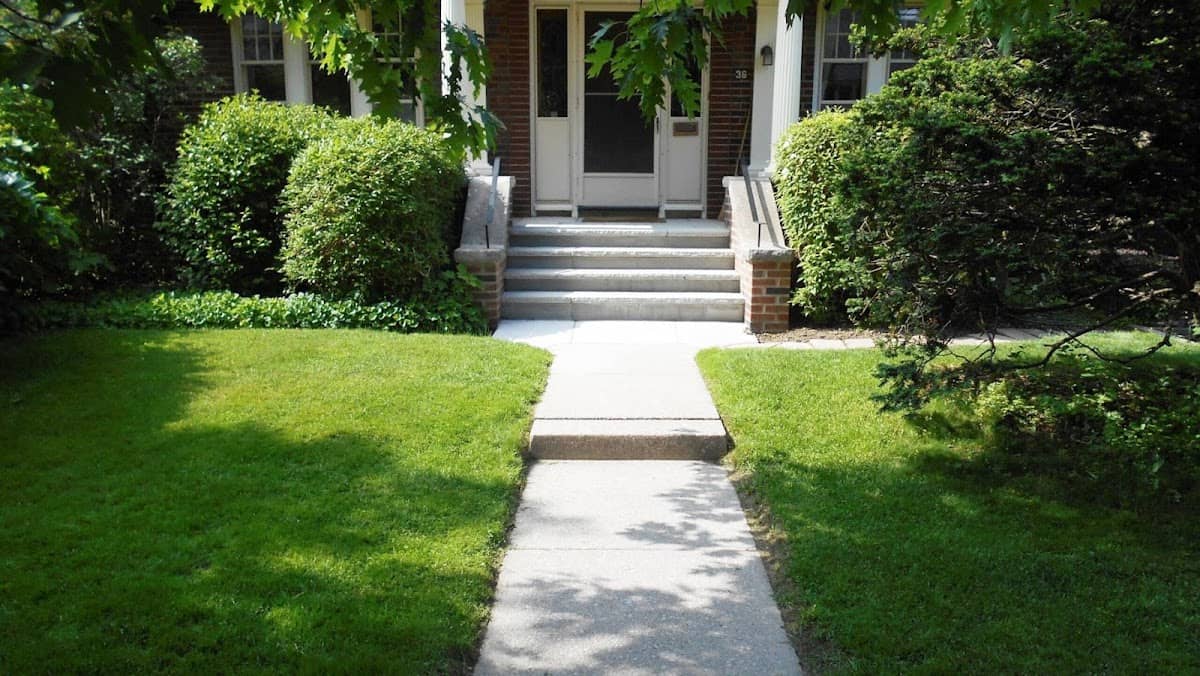
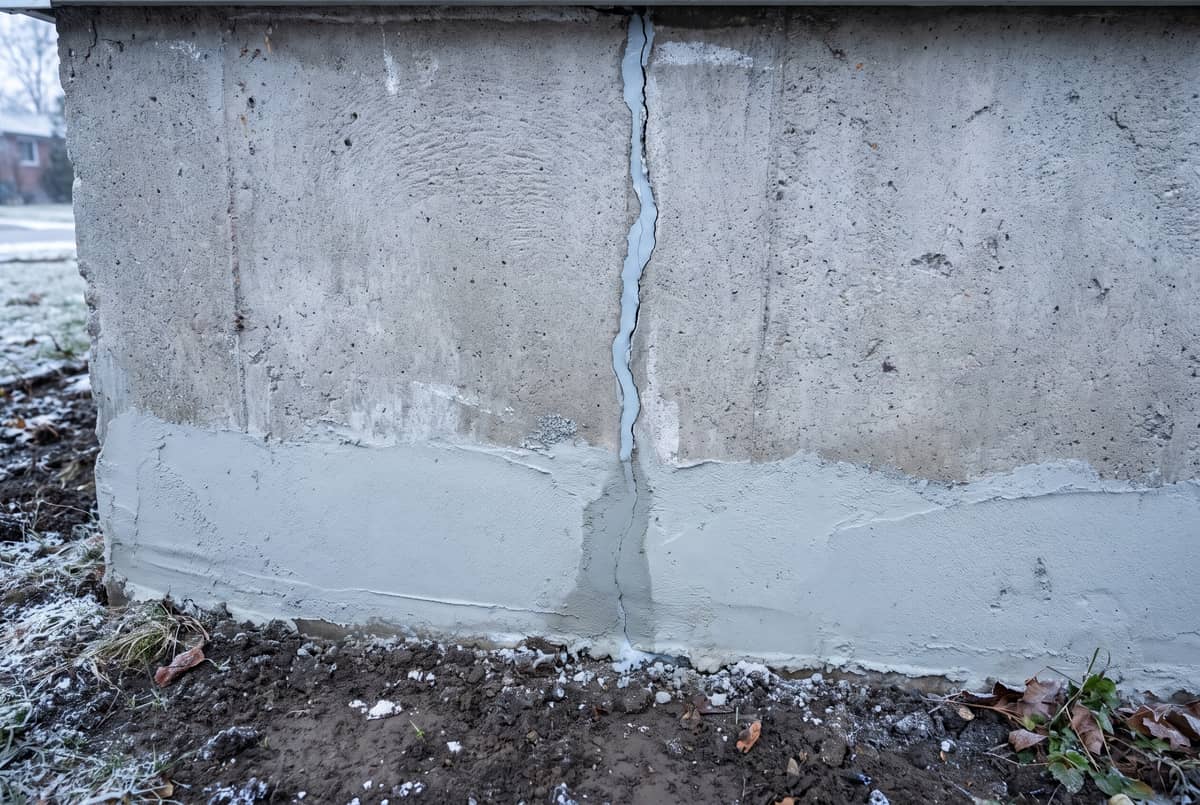
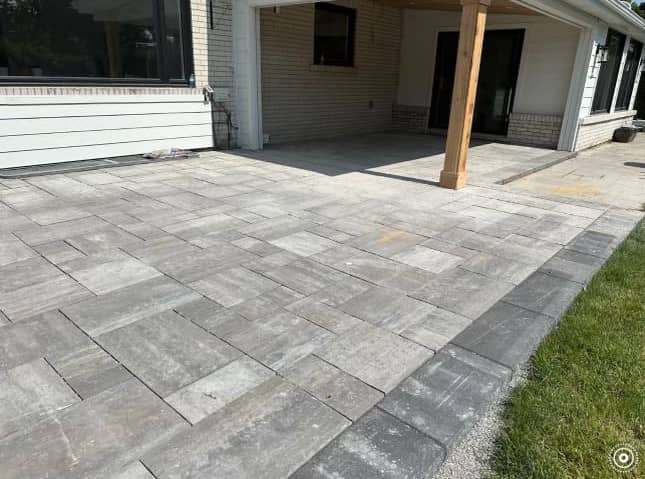
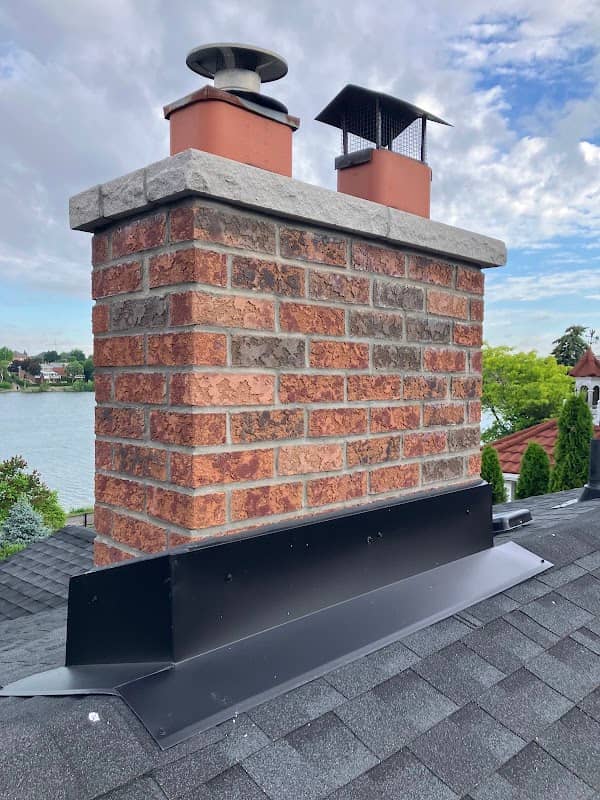
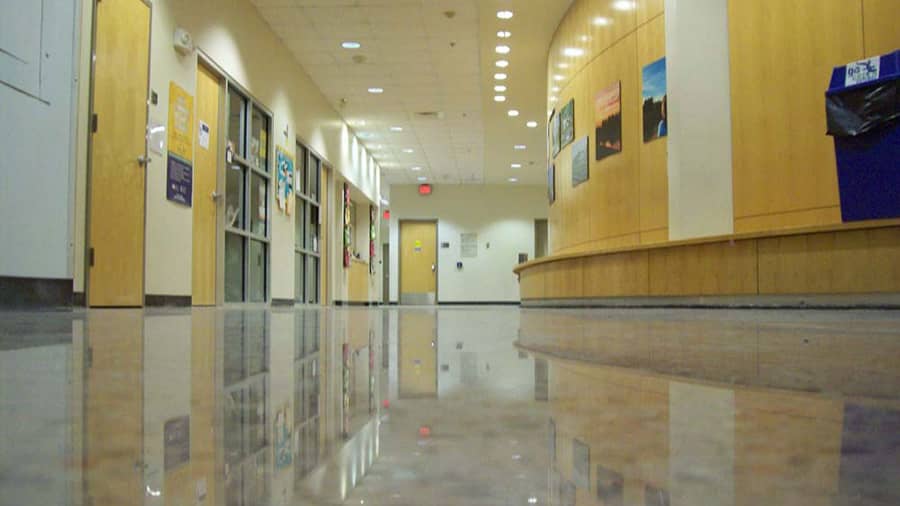
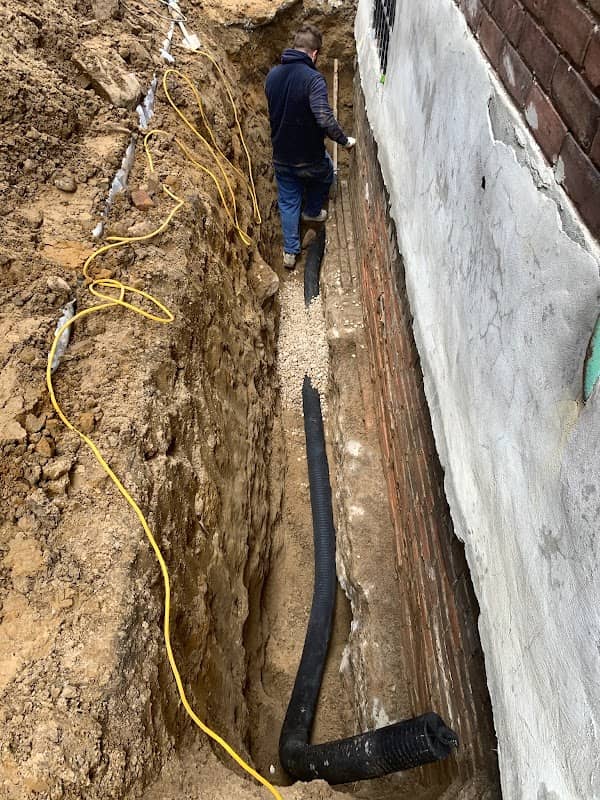
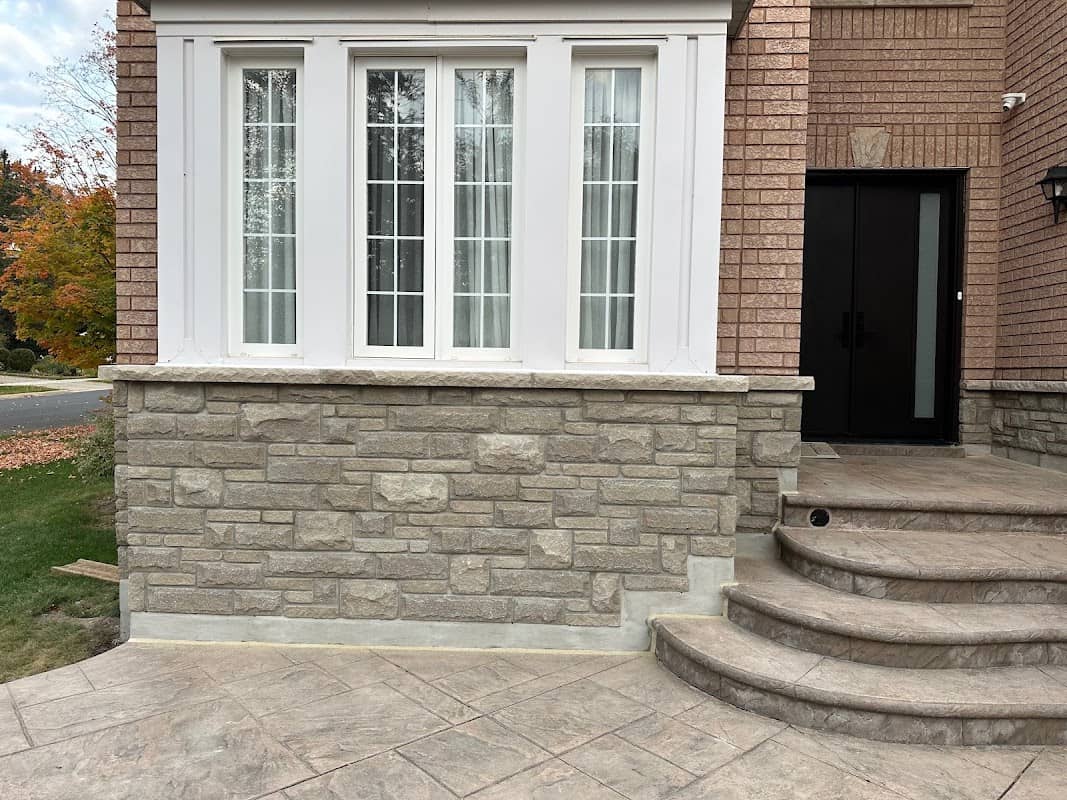
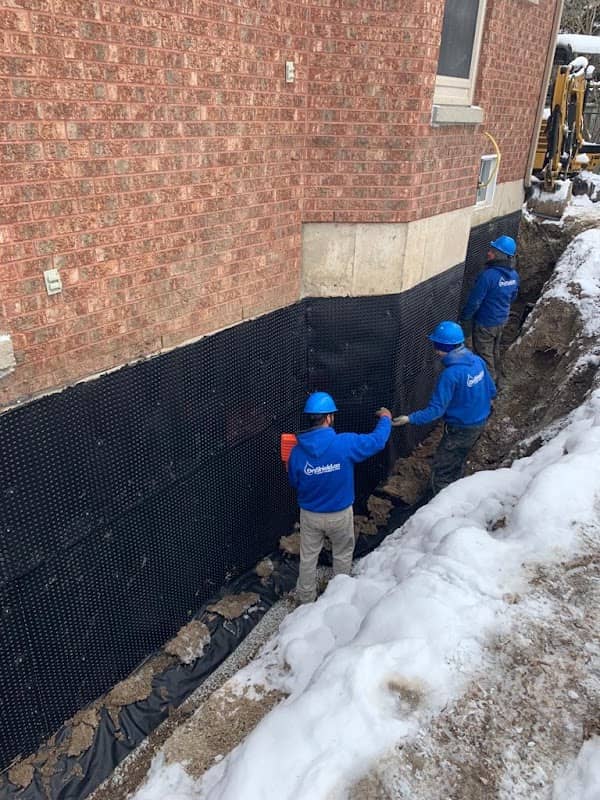
A rate per square foot is hard to picture. These are photographs published by ConcreteFinder companies working in this category across the Greater Toronto Area, at the size they deserve rather than as thumbnails. Each one links to that company's record, with its rating, its service area and its phone number.
Each photograph was published by the company shown, not chosen to sell a finish. Photographs that state a credential, a rating or an offer in the picture are excluded from this site.
What drives the price?
Spec, access and job size move concrete repair pricing more than anything else in Toronto. Each factor below is tied to a figure in the table above, so you can read a quote and see where the money goes.
Crack length, width, and whether it is actively leaking (poly vs epoxy choice)
Finished vs unfinished basement - drywall removal and restoration is quoted separately
Whether old failed parging must be stripped before recoating ($8–$18/sq ft vs $3–$8 new-over-sound)
Structural condition of the existing slab - overlays only work over sound concrete
Void size and slab thickness for lifting jobs, which drive how much material has to be pumped underneath
Decorative finish level: stamped, coloured, or Graniflex overlays add $2–$5+/sq ft over basic
Site access (rear yards, tight lots, below-grade walls) and demolition/disposal needs
Minimum mobilization charges (~$500–$900) that dominate pricing on small single-item repairs
Bundling multiple cracks or slabs in one visit reduces per-unit cost
What's specific to Ontario and Toronto?
Yes, Ontario changes the math: 13% HST sits on top of every quote, City permits apply to anything touching the right-of-way, and the freeze-thaw season closes the practical pour window. Each point below is what applies locally.
HST: Ontario's 13% HST applies to the full contract (labour + materials) for concrete repair. Contractor quotes are commonly given pre-HST - confirm whether a quote is 'plus HST' before comparing.
Permits: routine repair work (parging, crack injection, resurfacing overlays, slab lifting) on private property does not need a Toronto building permit, but underpinning or structural foundation alteration requires a building permit with drawings sealed by a professional engineer.
Right-of-way rules: widening a driveway, changing a curb cut, or building a front-yard parking pad involves the City of Toronto right-of-way and zoning bylaw 569-2013 - it requires city approval/licensing through Transportation Services, and many downtown lots are ineligible for pad licences entirely. Repairing an existing driveway in place needs no approval.
Seasonality: the practical exterior season for parging, overlays, and pours is roughly April–November. CSA A23.1 cold-weather concreting rules (heating, hoarding, protection below 5°C) make winter exterior work costlier, and most GTA parging crews stop when overnight temperatures drop below freezing since fresh parge coats fail if they freeze before curing.
Freeze-thaw: Toronto's freeze-thaw cycles are the root cause of most spalling and parging failure - single-coat consumer-grade parging typically fails within 2–3 winters (Alasya Construction), which is why properly prepped two-coat systems quote higher.
Slab lifting timing: polyurethane foam lifting can be done in colder temperatures than mudjacking, but leveling is best scheduled after spring thaw so slabs are lifted against settled, not frost-heaved, grade.
Salt damage: de-icing salt accelerates surface spalling on GTA driveways and steps; contractors commonly recommend a penetrating sealer after any resurfacing, which Nusite Group prices at about $1 to $2 per square foot and says extends a resurfaced driveway's life by 3 to 5 years in salt-exposed conditions.
How can I pay less?
The biggest savings come from job timing, bundling small pours into one mobilization, and doing demolition yourself. Each lever below is tied to a real number in the table above, not to cutting the parts that matter.
Bundle repairs into one visit - multi-crack injection packages and multi-slab lifting discounts beat the ~$500–$900 per-visit minimum every time.
Resurface rather than replace when the slab is structurally sound: a $4-$8/sq ft overlay against $12-$18/sq ft for tear-out saves roughly half (Nusite Group).
Ask for mudjacking rather than polyurethane foam on low-stakes slabs like a back patio; foam costs more upfront and is worth saving for driveways and garage slabs where permanence matters.
Book shoulder-season (early spring or late fall) - GTA concrete crews discount to fill the calendar outside the May–September rush.
Fix small: a $250-$600 parging patch or a $750-$1,000 polyurethane crack injection now prevents a $3,500-$7,000 re-parge or a $3,000-$5,500 exterior excavation later.
Get three quotes minimum. Published Toronto figures for one interior crack injection run from $500 (RenoQuotes, Canada-wide) to $3,000 (Leaquida, per seam), the widest spread of any home-repair trade.
Ask whether the quote includes HST and interior finishing restoration; two 'identical' quotes can differ 13%+ on tax treatment alone.
How did we research these numbers?
Every price on this page was re-opened at its source and matched to the sentence that carries it. Where sources disagree, ConcreteFinder keeps each row on one publisher's own figure and writes the disagreement down here rather than blending them into a range nobody published.
All price rows come from Canadian sources quoting CAD; US cost guides that appeared in search results (Angi, HomeAdvisor, HomeGuide, Sundek) were excluded rather than converted to avoid USD contamination.
Parging sources conflict: GTA Masonry quotes $3–$8/sq ft standard while Alasya Construction quotes $6–$12/sq ft for a two-coat premium system with acrylic finish adding $3–$5/sq ft. Both rows are shown separately; budget $5–$8/sq ft for a defensible mid-range. GTA Masonry also quotes full removal-and-recoat at $25–$55 per linear foot.
Crack injection sources conflict. DryShield (Toronto, updated July 2026) publishes $750-$1,000 per crack for polyurethane and $750-$1,500 for epoxy, with the same floor for both; RenoQuotes' Canada-wide interior figure is $500-$1,500; Leaquida Waterproofing (Toronto, 2025) quotes $1,500-$3,000 per interior seam and $2,500-$4,500 for diagonal cracks needing carbon-fibre staples. Expect quotes across that whole spread.
Toronto slab-lifting contractors do not publish per-square-foot rates. The Canadian per-sq-ft mudjacking and polyjacking figures this guide used to carry came from a page that now blocks non-browser requests, so they were removed rather than repeated unverified. What remains is Toronto Concrete Repairs' own per-job figure, $1,200-$2,500 for a residential levelling job. Polyurethane foam costs more upfront than mudjacking but cures in about fifteen minutes and adds far less weight to the soil.
Resurfacing overlay quotes cluster tightly: Nusite Group $4-$8/sq ft against $12-$18/sq ft for full tear-out and replacement, so an overlay saves roughly half when the base slab is structurally sound.
Most GTA concrete contractors carry an effective minimum call-out of roughly $500–$900, so tiny repairs (one hairline crack, one step edge) rarely price below that regardless of per-unit rates.
Per-project resurfacing benchmark: a porch/walkway surface resurfacing job in Toronto runs $2,500–$4,500 (Toronto Concrete Repairs); full porch restoration $5,000–$8,000.
ConcreteFinder tracks 83 concrete repair contractors across the Greater Toronto Area, rated 4.82★ on average. The three below rank highest on our review-weighted score, based on ConcreteFinder's analysis of 83 GTA businesses, July 2026.
3 of 4 details on file · Listed for foundation contractor work around Willowdale, 282 Google reviews average 4.9★, also listed under concrete repair & leveling and polished concrete & epoxy floors.
3 of 4 details on file · Leaside concrete patio contractor, 86 Google reviews average 4.9★, also listed under concrete repair & leveling and concrete contractors.
Where in the Greater Toronto Area can you get this done?
One thing the address genuinely changes is access, which every quote on this page is sensitive to: a downtown lot a truck cannot chute into means a pump or a wheelbarrow crew, and a rear-laneway job is formed differently from an open suburban frontage. The other is how many companies will bid at all. These are the Greater Toronto Area areas where ConcreteFinder tracks the most concrete repair contractors, with the count on each.
What do the terms on a concrete repair quote mean?
A quote is hard to compare when half of it is trade vocabulary. These are the terms used in the table above, defined in the words a contractor would use.
Crack injection
Repairing a foundation crack by injecting resin into it under pressure from inside. Polyurethane stays flexible and seals active leaks; epoxy sets rigid and restores structural strength.
Parging
A cement coating applied over the exposed part of a foundation wall, both to finish it and to shed water. A single-coat consumer-grade parge coat typically fails within a few Ontario winters.
Mudjacking
Lifting a settled slab by pumping a cement slurry underneath it through drilled holes. Polyurethane foam does the same job with a lighter material that cures in minutes.
MPa
Megapascals, the compressive strength of a concrete mix. Ontario residential flatwork is normally 25 to 32 MPa; higher numbers cost more per cubic metre because they carry more cement.
Air-entrained concrete
A mix with microscopic air bubbles deliberately introduced so water has somewhere to expand when it freezes. It is the standard specification for exterior concrete in Toronto's freeze-thaw climate.
Granular base
The compacted crushed stone layer poured concrete sits on, usually Granular A. Depth and compaction of this layer, not the slab, are what stop a driveway or patio settling.
Which other costs should I check?
Most concrete repair quotes arrive alongside another one. These are the three ConcreteFinder guides closest to this job, each priced from its own named sources.
How much does it cost to fix a foundation crack in Toronto?
Interior crack injection is the standard fix. DryShield, a Toronto and GTA waterproofer, publishes $750 to $1,000 per crack for polyurethane, which stops active leaks, and $750 to $1,500 for structural epoxy. RenoQuotes' Canada-wide interior figure is $500 to $1,500, and some Toronto firms quote $1,500 to $3,000 per seam, so get two or three quotes. Exterior dig-and-seal repairs run $3,000 to $5,500 per crack.
What does parging cost per square foot in Toronto?
GTA quotes span $3–$8 per square foot for standard parging and $6–$12 for a premium two-coat system with proper surface prep; an acrylic finish coat adds $3–$5 per square foot. Small patches under 10 sq ft run $250–$600, while fully re-parging a detached Toronto home's foundation typically costs $3,500–$7,000.
Is it cheaper to resurface a concrete driveway than replace it in the GTA?
Yes, substantially. Nusite Group prices a resurfacing overlay at $4 to $8 per square foot for materials and labour, against $12 to $18 per square foot for full tear-out and replacement. The catch: the existing slab must be structurally sound. If it is badly cracked, heaved or settling, an overlay will fail and replacement is the better spend.
Which is cheaper, mudjacking or polyurethane foam lifting?
Mudjacking is cheaper upfront; polyurethane foam costs more but cures in about fifteen minutes, adds far less weight to the soil, and is generally considered permanent. Toronto contractors do not publish per-square-foot rates for either, so the figure to budget against is the job: Toronto Concrete Repairs prices a residential mudjacking or levelling job on a walkway or porch slab at $1,200 to $2,500 for a day's work.
How much does it cost to repair spalling concrete steps or a porch in Toronto?
Moderate spalling repair - grinding out crumbling concrete, reinforcing, and refacing with repair mortar or an overlay - runs $1,000–$1,500 in Toronto per Toronto Concrete Repairs. Individual step repair or replacement costs $300–$800 per step. If spalling covers most of the surface, a full resurfacing at $2,500–$4,500 usually beats patching piecemeal.
Do I need a permit for concrete repair in Toronto?
Usually no. Parging, crack injection, resurfacing, and slab lifting on your own property don't require a building permit. You do need one (plus engineered drawings) for structural work like underpinning or foundation replacement, and any work in the city right-of-way - widening a driveway curb cut or installing a front-yard parking pad - needs City of Toronto approval, with pad licences often costing several hundred dollars.
What does it cost to level a sunken walkway or porch slab in Toronto?
Toronto Concrete Repairs prices mudjacking or levelling at $1,200 to $2,500 for a one-day residential job. Toronto slab-lifting firms do not publish per-slab or per-square-foot rates, so treat that job figure as the planning number and bundle several slabs, front walk, patio and garage apron, into one visit for the best rate.
Why do Toronto concrete repair quotes vary so much for the same job?
Because scope hides below the surface. A $750 crack injection becomes $2,500 or more if the basement is finished, the crack is structural, or carbon-fibre reinforcement is needed, and parging jumps from $3 to $8 per square foot to far higher when old failed parging has to be stripped first. Toronto's freeze-thaw climate also punishes cheap single-coat work, so premium quotes often reflect prep, not padding.
 1
1